

BATHROOM REMODELING
Bathroom Remodeling Contractor in
Brea, CA
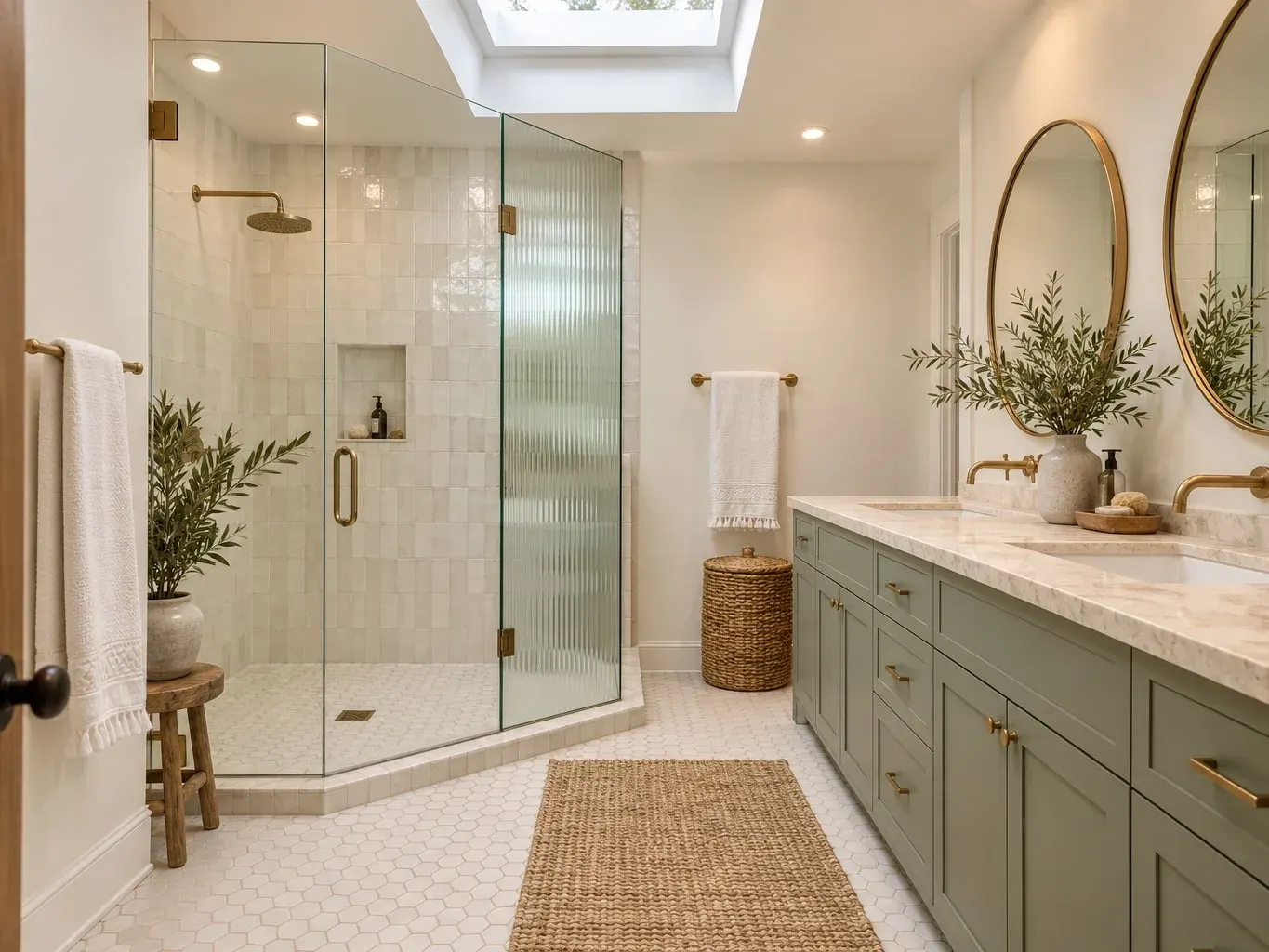
With more than 10 years of experience, ARD Remodeling remodels bathrooms for homeowners in Brea, CA, from a new vanity and faucet to a rebuilt shower. About two-thirds of Brea's housing dates from 1960 to 1990, so the plumbing behind the tile is often as old as the tile, and the city's water tests as very hard on the USGS scale. The free estimate starts with those two facts, so the fixtures, the finishes and the paperwork route are clear before anything is ordered.
- Free estimates
- Shower, tub and vanity
- Waterproofing planned
- Scope in writing
Older homes
A 1970s house and the January 1994 fixture cutoff
The state law, Civil Code article 1.4 as chaptered in SB 407, applies to residential property built and available for use on or before January 1, 1994. For a single-family home, section 1101.4 makes replacing every noncompliant fixture a condition of final permit approval when the building is altered or improved. That means a toilet made to use more than 1.6 gallons per flush, a showerhead above 2.5 gallons per minute and an interior faucet above 2.2. Brea's Housing Element reports that 77 percent of owner-occupied homes were built before 1989, so for most owners the question is which fixtures are on the list.
Find the build year first
Tell us when the house was built. It settles whether the rule is in play before the scope is written.
Fixtures go into the scope
A toilet, showerhead or faucet that fails the test is replaced as part of the job, so it is in the written scope from the start.
Shared buildings read differently
A building with more than one unit counts as multifamily. For a permitted alteration to a room, the applicant replaces noncompliant fixtures in that room, not the whole building.


BREA PLUMBING AND PERMITS
What to settle before the Building & Safety counter
A planning guide, not a ruling. The city decides what a project needs.
Named in the city's handout
- Upgrading or relocating plumbing fixtures
- Installing new electrical wiring or upgrading an electrical panel
- Demolishing a load-bearing wall
- Installing or replacing a window or door
Have ready when you call Building & Safety
- Which fixtures stay where they are and which move
- Whether any wall, window or opening changes
- The year the house was built, and whether it is a house, townhome or condo
- Any historic designation on the house or the neighborhood
- Your association's name, if there is one
Two review tracks
The handout says standard plumbing, electrical and mechanical permits may be issued over the counter, while structural alteration plans go to plan check.
Historic designation
If the house or neighborhood has one, the handout says the review can run longer and carry more restrictions.
Codes change, so we confirm the route with Building & Safety before materials are ordered.
Flow limits
What the city's 2025 CALGreen sheet says about the fixtures you pick
Section 4.303.1 on the city's 2025 residential checklist sets the effective flush volume of toilets at no more than 1.28 gallons, showerheads at no more than 1.8 gallons per minute at 80 psi, and residential lavatory faucets at no more than 1.2 gallons per minute at 60 psi. A note on the same sheet repeats that permitted alterations replace noncompliant fixtures. We pick fixtures with those numbers beside the catalog page.
A hand-held counts as a showerhead
The sheet says a hand-held shower is considered a showerhead, so it meets the same limit.
Several outlets on one valve
When one valve feeds several outlets, the sheet caps the combined flow at 1.8 gallons per minute, or asks for one outlet to run at a time.
Faucets have a floor too
Lavatory faucets also carry a minimum of 0.8 gallons per minute at 20 psi.
VANITY STORAGE
A vanity that keeps the counter clear
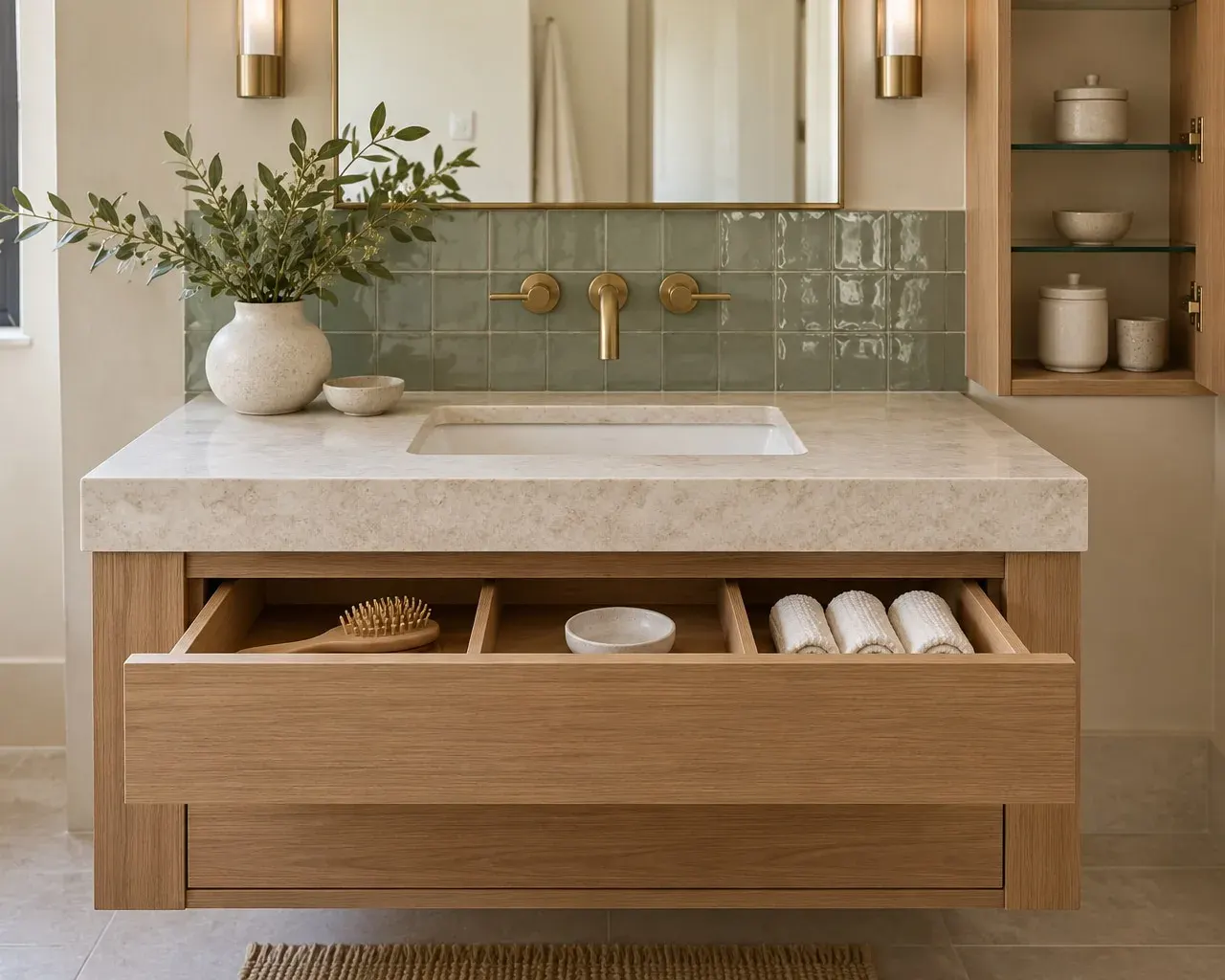
Counters fill up fast in a bathroom the whole household shares. We plan the drawers, the mirror cabinet and the open shelf around what you actually keep there, so daily items have a place and the sink area stays easy to wipe.
- Drawers sized to the contentsDeep drawers for bottles and shallow ones for small items, with dividers.
- Closed storage at eye levelA mirror cabinet holds the daily items so the counter stays free.
- A plug where you need itAn outlet for the hair dryer or toothbrush, planned with the wiring.
Local water
Very hard water and the finishes that cope with it
The City of Brea's 2025 Water Quality Report says the supply is a blend of surface water imported by the Metropolitan Water District of Southern California and groundwater from Cal Domestic in Whittier. Its tables list total hardness as calcium carbonate at 225 ppm for the groundwater and 236 ppm, or 14 grains per gallon, for the imported water. The USGS calls anything above 180 mg/L very hard, and says hard water leaves soap scum and a film on glassware. On a new shower, finish choices matter.
Glass and fixture finishes
Fluted or lightly textured glass shows spots less than clear glass. We match faucet finishes to how much wiping you want to do.
The water heater and valves
The USGS notes that heating hard water can leave deposits that cut water heater efficiency, so we ask about the heater and shut-offs.
CORNER SHOWER, TUB OR BOTH
Three ways to arrange the bathing area
The choice drives the plumbing and the glass, so settle it before the tile is picked.
Corner shower with fixed glass
Best for: A hall bath where the tub is rarely used
- One fixed panel and a slim door can be a single piece of glass
- Floor area opens up for a wider vanity
Keep in mind: The curb or threshold and the floor slope to the drain are set before any tile is chosen.
Alcove tub with a shower
Best for: Households with children or anyone who prefers a bath
- Fits the standard tub opening
- One valve and one drain to serve
Keep in mind: Soap scum and mineral film gather on tub-side glass, so pick a simple door profile or a curtain.
Soaking tub plus a separate shower
Best for: Larger primary bathrooms
- Two bathing zones that can be used at once
- Room for a bench or a niche in the shower
Keep in mind: Takes real floor area, two sets of plumbing lines and a floor framed for a full tub.
Shared buildings
Condos, townhomes and other shared buildings
The Housing Element counts 30 percent of Brea's homes as multifamily, and the fixture statute reads differently for them, as described above. In a shared building the order of work also depends on where the shut-off is, who must be told before the water goes off, and what your association says about floor protection and work hours. We collect those answers first.
Ask where the shut-off is
A unit may have its own valve, or the whole stack may share one. That decides how the water-off day is planned.
Get the rules in writing
Ask your association for its work-hour and floor-protection rules, and send them to us.
Tell the neighbors early
Neighbors below and beside hear the noisy and wet days first, so word goes out before they begin.
FOR THE VISIT
Notes that help at a bathroom estimate
Rough answers are fine.
- 1The approximate year the house was built, and whether it is a house or a condo
- 2Which fixtures you want to replace and which you want to move
- 3Any gallons-per-flush or flow markings you can read on the toilet, showerhead and faucet
- 4Whether the glass or tile shows a white mineral film
- 5Leaks, soft spots or stains on the floor or on the ceiling below
- 6Photos of every wall and the ceiling
- 7Your association's contact, if you have one
Leave blanks if you must. We sort out the rest in the room.
MORE IN THIS CITY
More Remodeling in Brea
 Service overviewKitchen RemodelingBeautiful kitchens that bring together thoughtful design, quality materials and expert craftsmanship.See the service
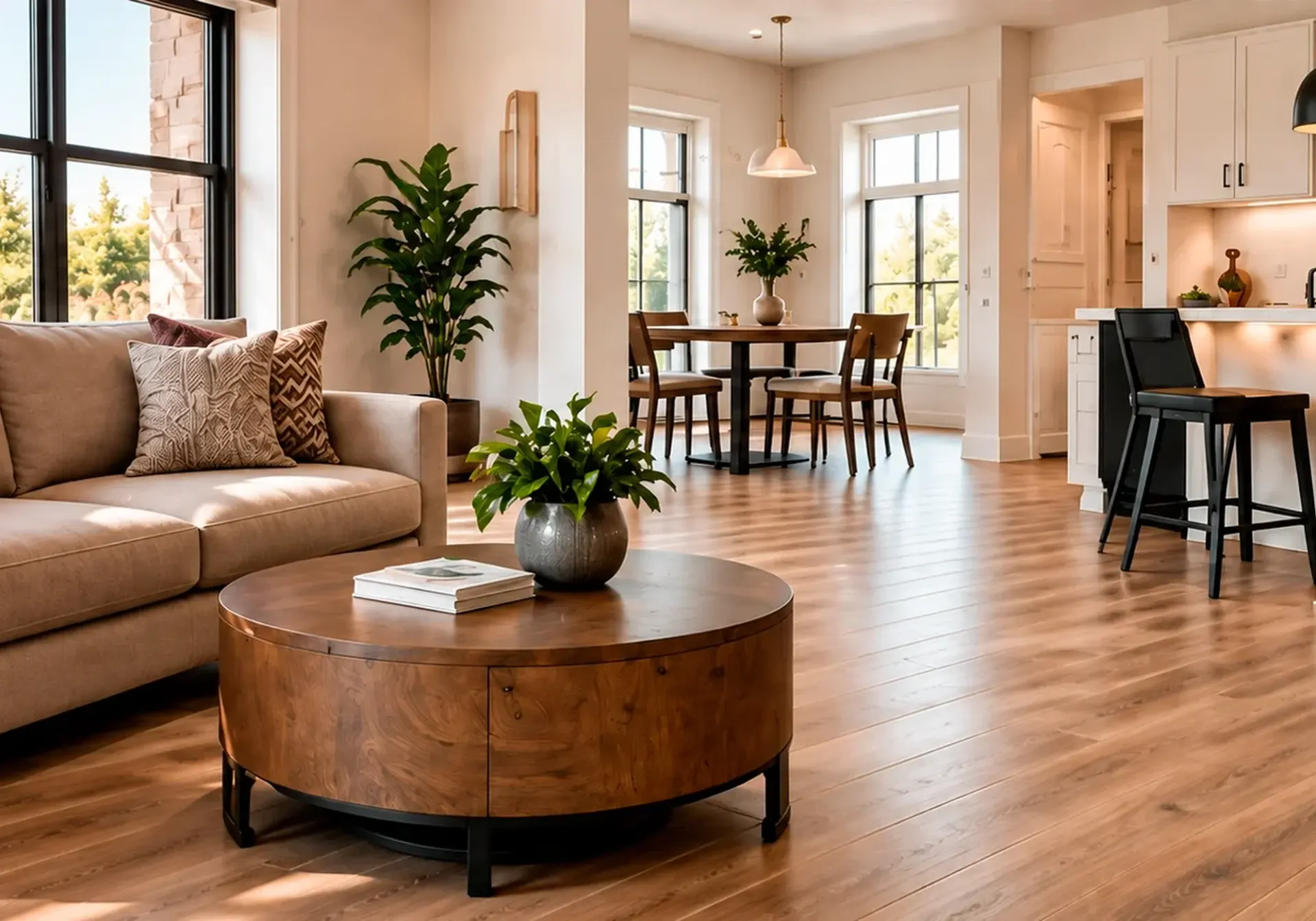 Service overviewFlooring & TileStylish, durable, and professionally installed flooring and tile for every room in your home.See the service
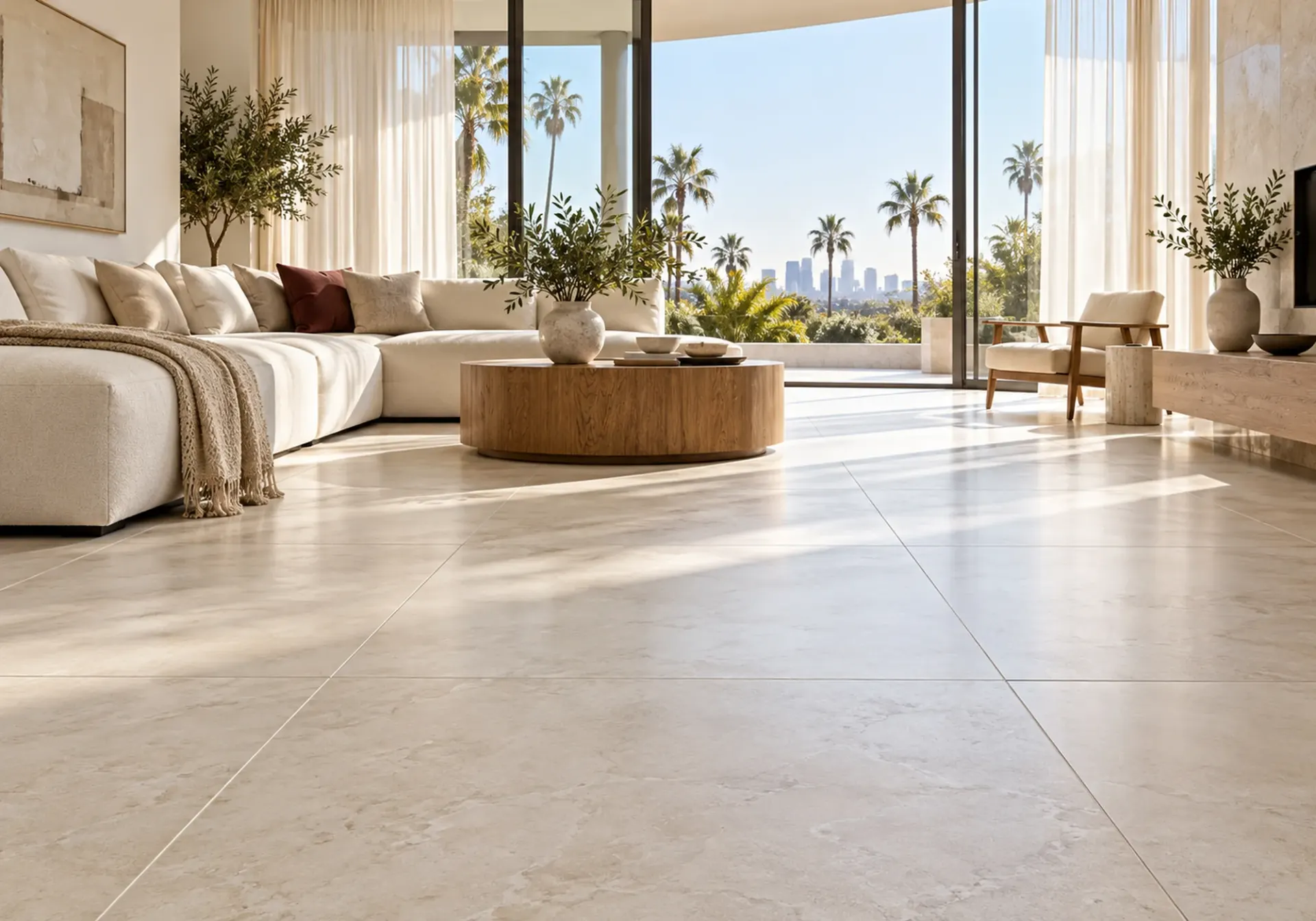 Service overviewTile InstallationFloor, shower, backsplash and patio tile installed on a properly prepared surface, with clean layouts and neat grout lines.See the service
 Service overviewWhole-Home RenovationsDesign, construction and finishing details brought together into one carefully coordinated project.See the service
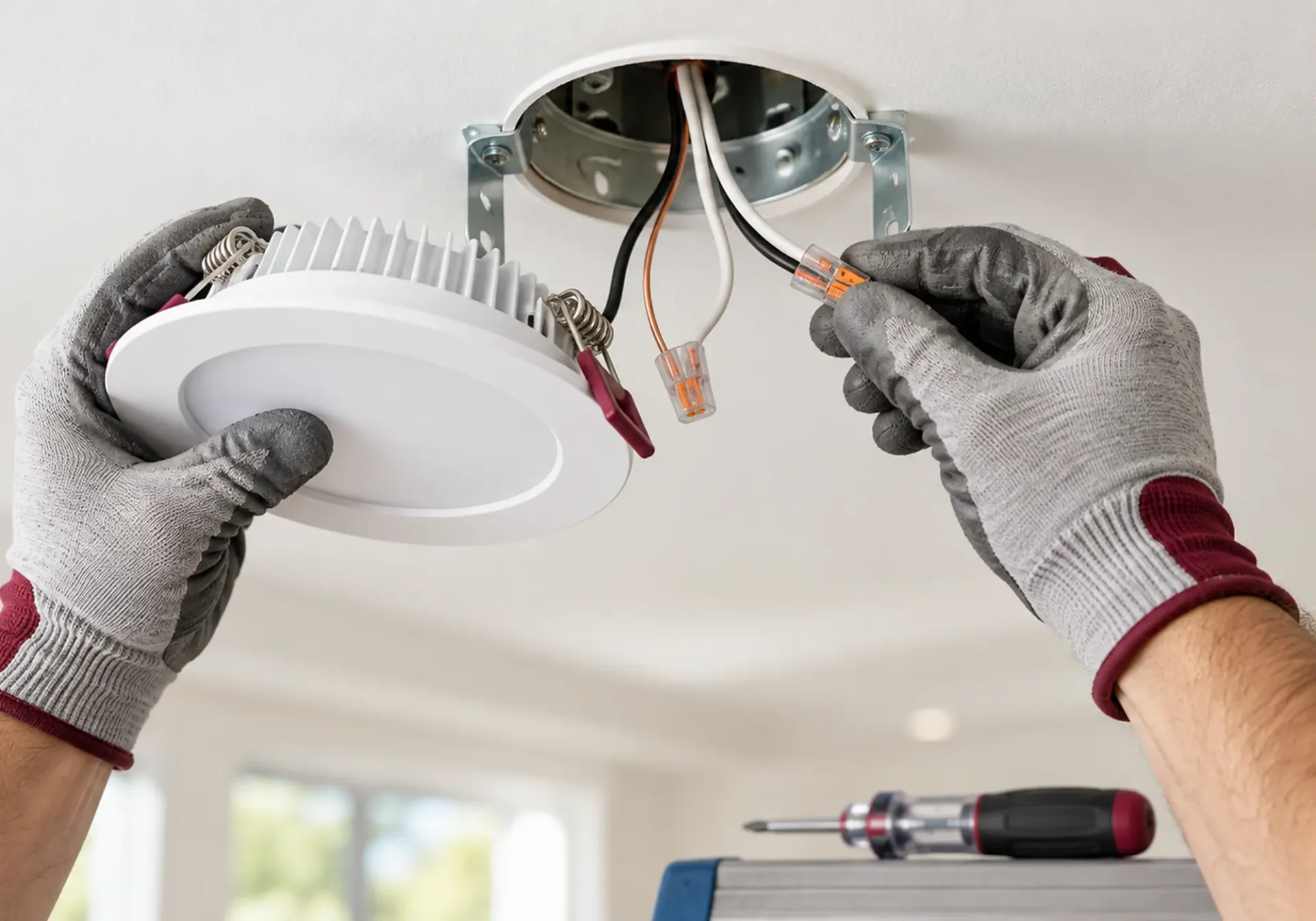 Service overviewLighting InstallationRecessed lights, pendants, chandeliers, under-cabinet and outdoor lighting, wired safely and placed where it matters.See the service
 Service overviewPaintingFlawless finishes, lasting beauty, and attention to detail in every interior and exterior painting project.See the service
 All remodeling in BreaEverything we do in this city, on one page.
WHAT BOTHERS YOU MOST?
Spots on the glass, old fixtures or a tub nobody uses?
Describe the bathroom and what you would change. We will say which way the project leans and what Brea's rules mean for it.
HOW IT WORKS
How a bathroom remodeling project runs
Step 1
Walk the bathroom
We check the room, the visible plumbing and the labels on the existing fixtures.
Step 2
Choose and write it down
Tile, vanity, glass and fixtures are picked together, flow limits included, then written into the scope.
Step 3
Match the plan to the city
We note which fixtures move, check the build year and help with the application, depending on the project.
Step 4
Build and walk through
Plumbing, waterproofing, tile and fixtures follow in order, and we review the finished room with you.
Good to know
Before you start in Brea
Every point below comes from the source shown on its card, with the date we last checked it. Rules change, so confirm anything that affects your project directly with the source.
- Official source
Flow limits on the city's checklist
The 2025 California Green Building Standards Code residential mandatory measures checklist, sheet 1, says in section 4.303.1 that water closets shall not exceed an effective flush volume of 1.28 gallons, single showerheads 1.8 gallons per minute at 80 psi, and residential lavatory faucets 1.2 gallons per minute at 60 psi. A note under section 301.1.1 says that on and after January 1, 2014, residential buildings undergoing permitted alterations shall replace noncompliant plumbing fixtures.
City of Brea, Standards (CA Green Building Standards 2025 - Residential) Checked 2026-10-30 - Official source
What the city's water is made of
The 2025 Water Quality Report (reporting year 2025) says the drinking water is a blend of surface water imported by the Metropolitan Water District of Southern California, whose sources are the Colorado River and the State Water Project, and groundwater imported from Cal Domestic in Whittier, which originates in the Main San Gabriel groundwater basin. In the unregulated-chemicals tables, total hardness as CaCO3 averages 225 ppm (range 210-240) for the imported groundwater, and 236 ppm (range 191-280), or 14 grains per gallon (range 11-16), for the district's treated surface water.
City of Brea Water Division, 2025 Water Quality Report Checked 2026-10-30 - Official source
Plumbing in the city's permit handout
The Building Permits 101 handout lists upgrading or relocating plumbing fixtures, installing new electrical wiring or upgrading an electrical panel, demolishing a load-bearing wall, and installing or replacing a window or door among the work that needs a permit. It says structural alteration plans go to Building & Safety for plan check, while standard plumbing, electrical, mechanical and some demolition permits may be issued over-the-counter, and that a historic designation can lengthen the review and add restrictions.
City of Brea, Building Permits 101 (Building Permit Basics) Checked 2026-10-30 - California law
The state fixture law
As chaptered, SB 407 applies to residential and commercial real property built and available for use on or before January 1, 1994. Section 1101.3 counts a toilet above 1.6 gallons per flush, a showerhead above 2.5 gallons per minute and an interior faucet above 2.2 gallons per minute as noncompliant. On and after January 1, 2014, section 1101.4(a) makes replacing all noncompliant plumbing fixtures a condition of final permit approval for alterations or improvements to single-family residential real property. For multifamily property, section 1101.5(d)(1)(C) covers a room altered under a building permit.
California Legislature, Senate Bill 407 (2009), chaptered text Checked 2026-10-30 - Reference
What very hard means
The USGS Water Science School classifies water of 0 to 60 mg/L as calcium carbonate as soft, 61 to 120 as moderately hard, 121 to 180 as hard and more than 180 as very hard. It says calcium reacts with soap to form soap scum, that heating hard water can form deposits of calcium carbonate that clog pipes, shorten equipment life and reduce water heater efficiency, and that spots and film on dishes and glassware are residue that is not dangerous but unsightly.
U.S. Geological Survey, Water Science School, Hardness of Water Checked 2026-10-30

FAQ
Bathroom Remodeling questions in Brea
Direct answers to what homeowners ask us most. If your question is not here, call or send a request.
- Brea
- Permits
- Clear scope
Does the 1994 date apply to my Brea house?
The state law covers residential property built and available for use on or before January 1, 1994. Brea's Housing Element says 77 percent of owner-occupied homes were built before 1989, so it reaches most of them. For a permitted alteration to a single-family home, replacing noncompliant fixtures is a condition of final approval.
What flow limits does Brea list for new fixtures?
The city's 2025 residential CALGreen checklist lists 1.28 gallons per flush for toilets, 1.8 gallons per minute at 80 psi for showerheads and 1.2 gallons per minute at 60 psi for bathroom faucets. A hand-held shower counts as a showerhead.
Will very hard water spot my new shower glass?
It can. The city's 2025 report lists hardness of 225 ppm in its groundwater and 236 ppm in its imported water, and the USGS calls anything above 180 mg/L very hard. We go through glass, finishes and upkeep at the estimate.
I own a condo. Does the fixture rule still apply?
The statute treats a building with more than one unit as multifamily. For an alteration to a room under a building permit, the applicant replaces noncompliant fixtures in that room. Tell us the build year and we check how it reads for your unit.
Does moving the toilet or tub drain change how the city sees the job?
It can. The city's handout lists upgrading or relocating plumbing fixtures among work that needs a permit, and says standard plumbing permits may be issued over the counter. Building & Safety makes the call, and we help with the paperwork.
Can I swap a hall-bath tub for a corner shower?
Often. We check the framing, the drain position and whether it is the only tub in the house, then draw the corner shower with its curb or threshold before any tile is chosen.
Service area
Bathroom Remodeling near Brea
We work across Riverside, Orange, Los Angeles and San Bernardino counties. Call or send a request and we will confirm your address.
Prefer the full overview?
Bathroom Remodeling: main service page
READY TO GET STARTED?
Planning a bathroom remodeling project in Brea?
Tell us about your home and your plans. We will confirm the details and set up your free estimate.